Rodolfo Soriano-Núñez Lunes, 03 de Marzo del 2025
If Trump and the Republicans impose their agenda in Capitol Hill, 40 years of progress in the United States could end.
In Mexico, the new judiciary election opens the door for a lawyer with ties to the Legion of Christ to become a Justice of the Supreme Court, a potential new roadblock for victims of sexual abuse.
By Rodolfo Soriano-Núñez
In one of the darkest hours in the recent history of the world, paying attention to what keeps happening at the clergy sexual abuse crisis is more relevant.
The ongoing chaos in the halls of power from Washington, D.C, to London, Paris, and Berlin makes it easier to ignore legitimate complaints, to dismiss cases, and the ever-present risk of going back to an era of shutting down criticism of abuse, in religious settings, and at large.
It makes it easier for the ruling coalitions in Mexico, Argentina, France, or Spain, among other countries to dismiss credible accusations of sexual abuse, clergy and otherwise.
Paradoxically enough, it also allows to highlight how complacency towards sexual abuse, as a birthmark of the groups supporting Donald Trump and the destruction of the post second World War order that, with all its shortcomings allowed for an unprecedented understanding of human rights.
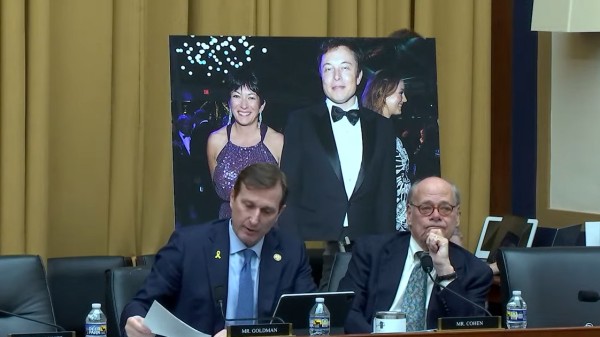
On Thursday February 27th, Representative Dan Goldman (D-NY) highlighted the existing relationships between Elon Musk and other key figures in the Make America Great Again movement, with individuals and groups with credible accusations of sexual abuse.
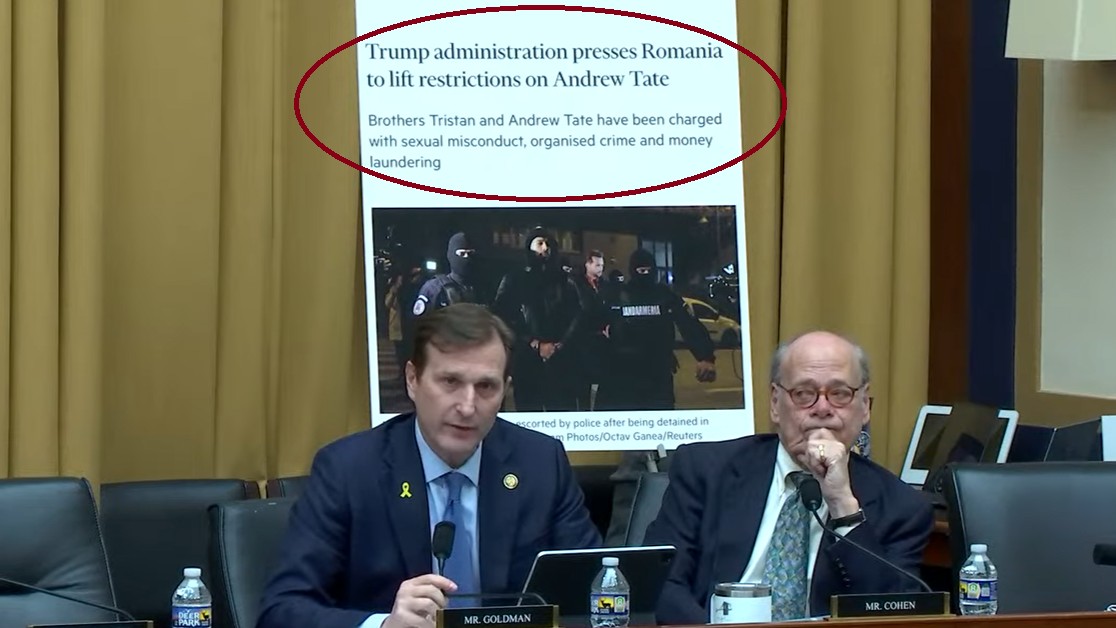
On the video after this paragraph, Goldman goes over on the one hand the relationship between Musk and Ghislaine Maxwell, a key figure in Jeffrey Epstein’s large-scale sexual abuse operation, and then, in the second part of the video he goes into the relationship between Musk and the Tate brothers.
In Maxwell’s case, despite Epstein’s suicide, that left unfinished the probe on the abuse he was able to perpetrate over many years with the complacency of law enforcement in at least the state of Florida in the United States, she was found guilty of sex trafficking of minors, and other offences as Epstein’s accomplice in 2021. As a consequence, a federal court in New York City sentenced her to a twenty years' imprisonment in June 2021.
The Tate brothers’ case is—at least on paper—still open, but the weakness of the Romanian courts and police allowed them to find refuge in the United States where, chances are, they will find some sort of “sanctuary,” at least for Trump’s second term in office.
In December 2022, the brothers Andrew and Tristan Tate were arrested in Romania, along with two females. In June 2023, the brothers and their companions were charged with “rape, human trafficking, and forming an organized crime group to sexually exploit women”.
Online harassment
However, a month later two of their accusers disappeared after a campaign of online harassment. The campaign emerged at the same time the brothers filed a defamation lawsuit, claiming five million USD in damages against one of their accusers. Now that they are in the United States it is almost impossible to assume that they would ever be back in Romania to face the charges.
Rep. Goldman video comes from the full hearing of that committee’s session available here. Some of the documents offered at that session are available here at the U.S. Congress website.
Also, it must be noted that this is not the only U.S. Congressional committee dealing with sexual exploitation, trafficking, and abuse at the time. Quite the opposite, the new Republican majority at Capitol Hill is doing its best to make as hard as possible for victims of sexual abuse, clergy or otherwise, to be heard.
The House Judiciary Committee has Jim Jordan as its chair. He holds such position despite credible accusations of covering up sexual abuse while he was a coach at the wrestling team in Ohio State University. If that was not enough, tomorrow Tuesday, March 4th, at 9 am ET, there is a hearing called to “end lawfare by State and Local Prosecutors.”
Given that calling’s vagueness it could mean the end of probes as those launched at different times by the State attorneys of Pennsylvania, Illinois, and Maryland dealing with clergy sexual abuse at the Roman Catholic dioceses in those three states. It could also mean the end of the so-called lookback windows opened in California and New York to deal with sexual abuse cases in decades prior.
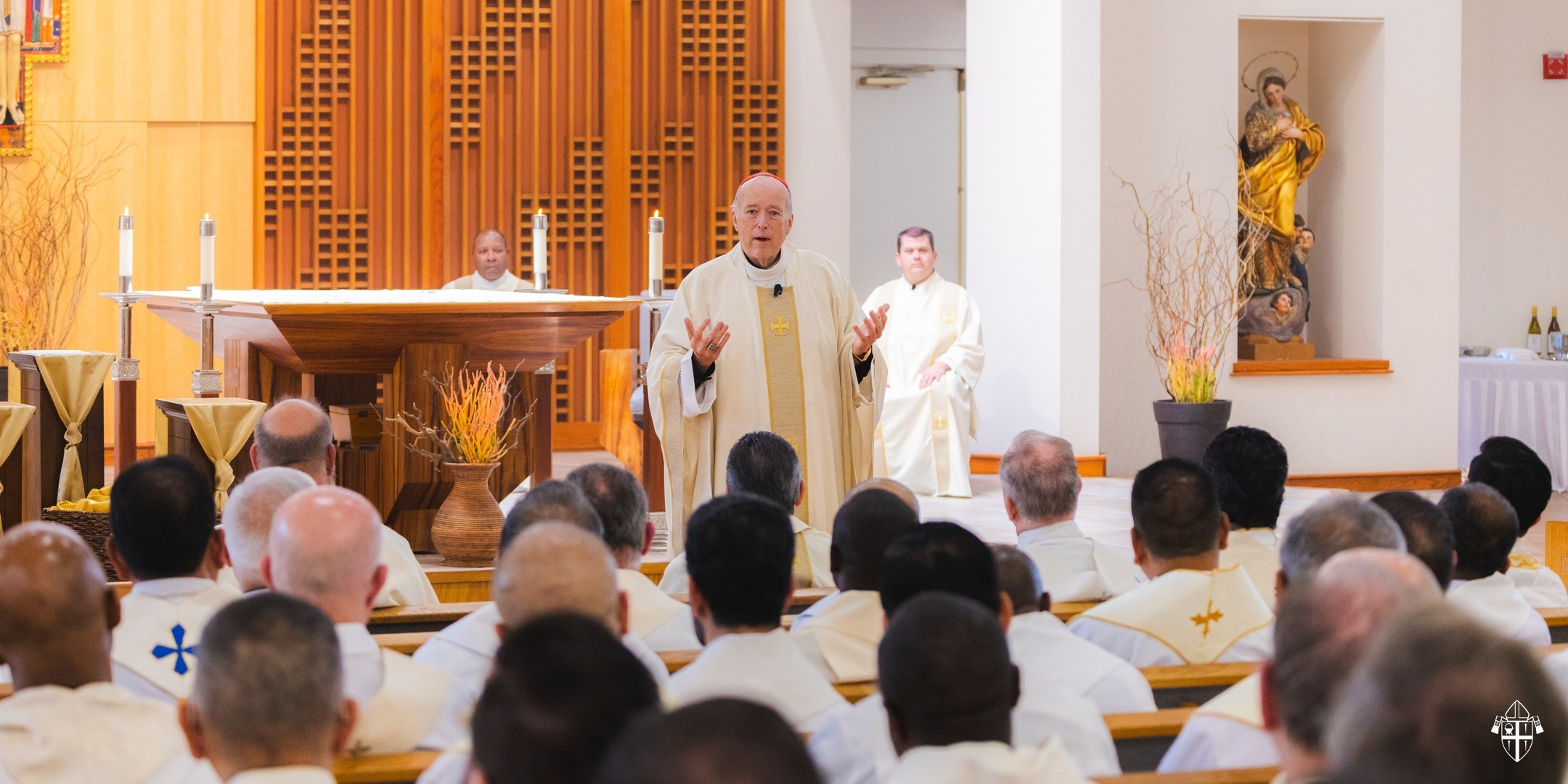
Back in 2024, Los Angeles Press published a story dealing with the role of said “lookback windows” in the state of California (see above) as part of a broader comparison with the apparent calm in the Mexican states of Baja California and Baja California Sur when talking about the clergy sexual abuse crisis, linked below.

English Edition
Baja California and the clergy sexual abuse crisis
As demonstrated in those stories texts, the differences observed between California, in the United States, and the states of Baja California and Baja California Sur in Mexico have nothing to do with the character of the Catholic bishops in one or the other country, but with the effectiveness and capacity of the police institutions and the judicial system in California, where it was even possible to sue Catholic dioceses and other institutions and individual actors for cases already prescribed, something unthinkable in Mexico or in any Latin American country.
Whoever thinks the Trump administration or the new Republican majority in both houses of the U.S. Congress interprets their alleged mandate as a tool to end sexual abuse, clergy or otherwise, is missing the point.
English Edition
Migration and abuse, the explosive mix
They use sexual abuse as a tool to manipulate the warring factions of the Catholic Church, as the story linked before this paragraph shows.
Going after the courts
It is that context that one must watch also at ongoing developments in, at least, Argentina, Mexico, and Spain.
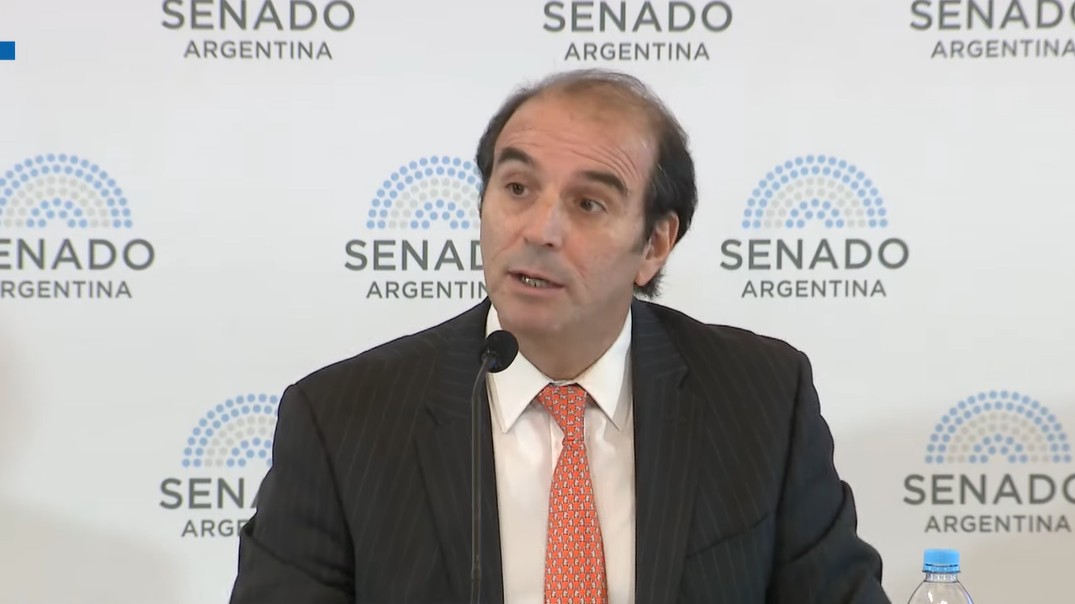
In Buenos Aires, the already rarified atmosphere created by Javier Milei around his Presidency with his dealings in shady cryptocurrencies, a staple of the global, radical, far-right promoting them as part of the destruction of governments and public institutions, got worse after Milei used an Executive Order, a decree, to appoint a Justice of the Argentine Supreme Court.
He actually appointed over the last week of February two Justices through heterodox means. It is impossible to go over both appointments. The one most relevant at this point is that of former corporate lawyer and former professor at the Universidad Austral of Buenos Aires Manuel García-Mansilla, and in Spanish at the Argentine judiciary website.
Putting aside his relationship with oil firms in Argentina, that would be enough to question his appointment, it is his relationship with Universidad Austral that set off all the alarms at Buenos Aires and all over Argentina.
Universidad Austral is one of the many colleges associated in Spain and Latin America to the Opus Dei, the secretive Spaniard religious “order” facing accusations of large-scale spiritual and labor abuse in Argentina and elsewhere in the Spanish- and English-speaking worlds.
Over at the YouTube channel of Steven Hassan, an expert on religious abuse one can find a 2019 interview with former member of the Opus Dei Eileen Johnson.
There she tells a story all too familiar for Argentine survivors of abuse at the Opus Dei, for Peruvian survivors of the Sodalitium of Christian Life, or for Mexican survivors of abuse at the Legion of Christ/Regnum Christi.
The “inner forum”
In Argentina that story is retold by local victims brought to Buenos Aires to become maids-in-religious-habits, serving the needs of the elite of the order, the numerary and super-numerary, as this story at The Buenos Aires Herald tells.
It is the story of groups resembling a Roman Catholic religious order, whose members are recruited under false assumption, while thrown into a chaotic amalgamation of groups, subgroups, and confusing hierarchies that facilitate abuse, and a permanent state of gaslighting and disorientation of their members.

They are offered a chance to achieve spiritual perfection, to become part of a family, while having a chance to pursue formal education, but instead are forced to deal with secretive practices, preventing them from having access to print media, books, legacy and social media, where their postal and electronic mail are subject to censorship and review, and where spiritual advisors, confessors or otherwise, are appointed to them, regardless of their preference, with little or no respect for the so-called “inner forum.”
The so-called “inner or internal forum” is the space of personal autonomy acknowledged by the Catholic teaching and regulations, as summarized by this note from the Apostolic Penitentiary of the Holy See, allowing for the exercise of free will.
Clerics, members of Catholic orders, and lay persons have the right to choose who are their confessors and religious advisors. Without that right, it is easy to fall prey to spiritual and other forms of abuse.
One of Legion of Christ and other radical, orders markers as a predatory organization, was to allow for “exceptions” for that rule, so members of those organization were allegedly willing to forfeit their right to choose their confessor and spiritual advisors.
The letter cited in this 2020 story explains how the Legion of Christ (as other predatory orders such as the Peruvian Sodalitium, the Argentine Institute of the Incarnate Word and the Spaniard Opus Dei) the inner forum was not respected (opens a story available only in Spanish).
It should not come as a surprise that some survivors of the Mexican Legion of Christ talk about their time in that order as a “kidnapping”, as this posting at a survivors group at Facebook proves (original text in Spanish, but you can request an automatic translation over Facebook).
At this point it is impossible to predict what will be the effect of García-Mansilla’s appointment as justice of Argentine’s top court, but it should not surprise that if cases of clergy abuse, sexual or otherwise, come to his sight, he will side with that order and with other Catholic entities, religious orders or dioceses, sued by the survivors of the many varieties of clergy abuse in Argentina and elsewhere.
One should be aware that well before Jorge Mario Bergoglio’s election as Pope Francis, Buenos Aires has been a major hub of religious activity. It is there that many orders in South America have their regional headquarters. That is why among the Opus Dei “handmaids” in The Herald’s story there are nationals of other neighboring countries such as Paraguay, and Bolivia.
And in Mexico too
Although in Mexico the attack on the Judiciary follows an entirely different path, as the country prepares itself for its first chance to elect judges, magistrates, and the very justices of the Supreme Court, the risks are similar to those in the United States or Argentina.
Among the many candidates to take a seat in the eleven-member Mexican Supreme Court of Justice, there is a former lawyer who used to work for Mexican super predator Marcial Maciel.
His name is Ricardo Alfredo Sodi Cuéllar, he was up until January the head of the State of Mexico Superior Tribunal. Five years ago, his peers at the Judiciary of Mexico’s largest state elected him to lead the Superior Tribunal of that state.
He, as many other judges from other Mexican jurisdictions resigned back on January 20th, their local offices to become eligible for positions in the federal Judiciary, and Sodi Cuéllar hopes to take one of the coveted chairs at the Mexican top court.
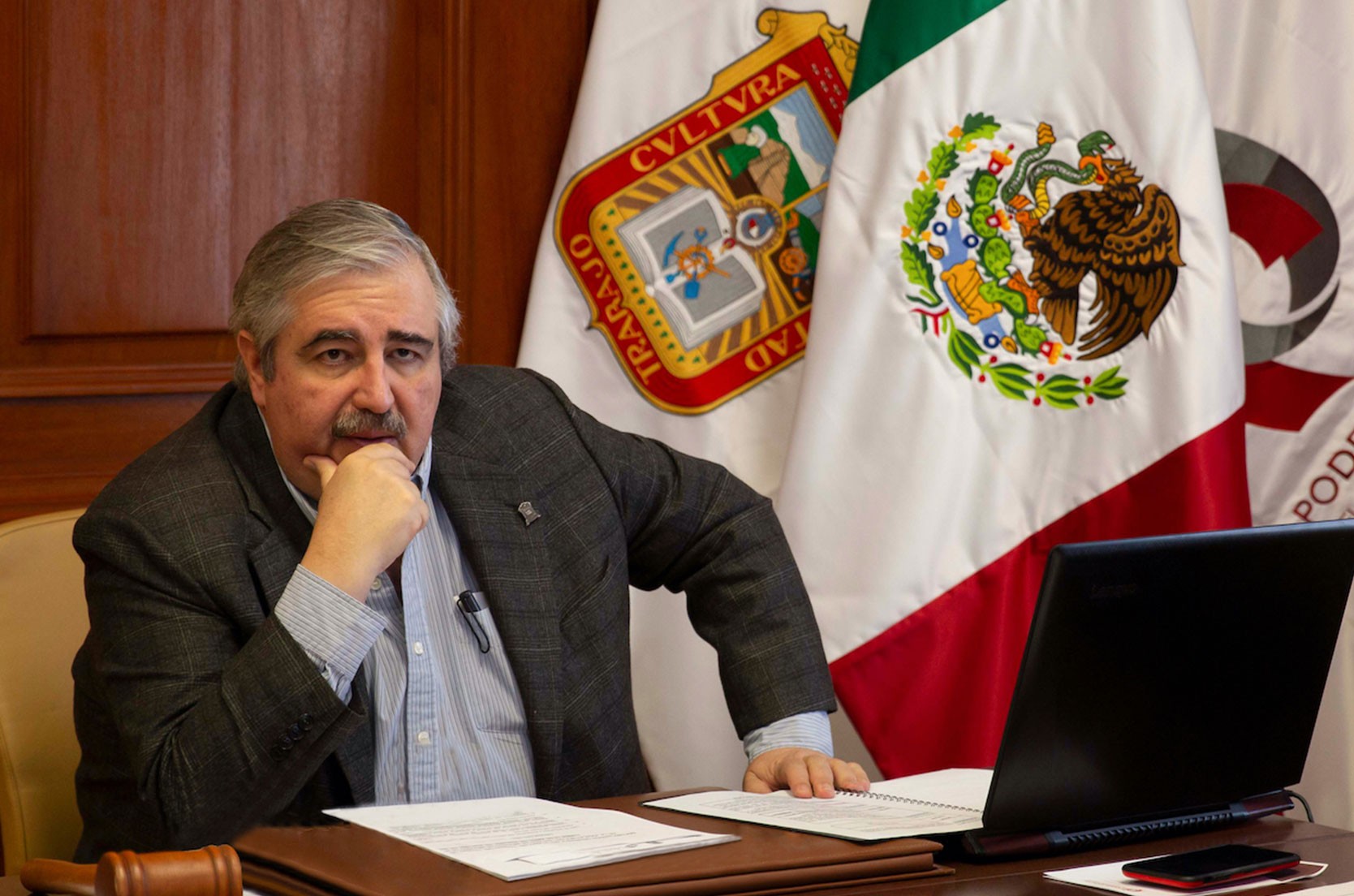
Back in 2020, Mexican news outlet Proceso published a story where Sodi Cuéllar claimed he never actually met Marcial Maciel (available only in Spanish here), but survivors of clergy sexual abuse at the hand of priests in Maciel’s order, the Legion of Christ, dispute that notion, claimed he played a role in the defense of their predators.
Sodi Cuéllar was, at some point in his career, a professor and later dean of the Law School at the Universidad Anáhuac, the Legion of Christ’s flagship institution in the Mexico City Metropolitan Area.
According to sources who requested anonymity, Sodi Cuéllar played a role in maneuvering the legal strategies after the cloaca maxima that used to be the Legion of Christ exploded in the late 1990s.
That explosion, possible only because U.S. journalists as Jason Berry were able to connect the dots between what was happening already in the United States with the Legion of Christ in New Hampshire and what had been happening in Mexico since the late 1930s, forced the discussion of the issue of clergy sexual abuse in Mexico. Had it been for the Mexican media of the 1990s nothing would have been published.
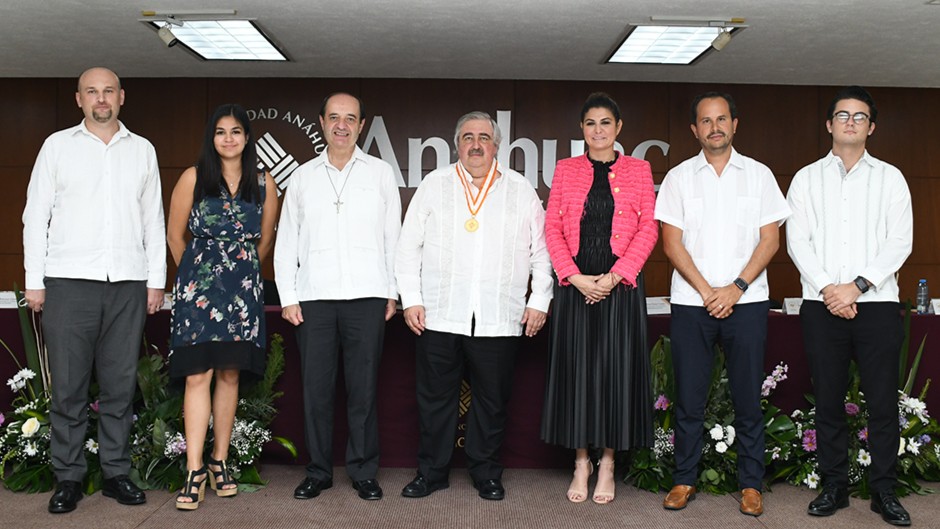
As recently as 2022, the Cancun campus of the Universidad Anáhuac awarded Sodi Cuéllar a medal praising his "leadership," while emphasizing his close ties with the Legion of Christ’s college.
The picture after this paragraph, has Sodi Cuéllar at the center, to the left, sporting a small crucifix is the president of that campus, Jesús Quirce Andrés, a priest and member of Maciel’s Legion of Christ. A press release, available only in Spanish, can be read here.
Lay State?
It also forced the acknowledgement that, despite the attitude of Mexican politicians when talking about the so-called “Lay State,” the Estado Laico, Mexico was as vulnerable to the evils of religious abuse, sexual or otherwise, Catholic, Mormon, or from the so-called Luz del Mundo (Light of the World) churches, as other Latin American countries with an Established Church as Peru, Panama, the Dominican Republic, or Colombia have been.
On the eve of the Mexican judiciary elections, one finds the same arrogance from the Mexican political establishment when survivors of clergy abuse, sexual or otherwise, warn about the lack of actual safeguards to prevent on the one hand clergy abuse and to actually punish it when it happens.
It is impossible to blame Sodi Cuéllar for the outcomes of all cases dealing with clergy sexual abuse in the state of Mexico, the most populous jurisdiction in the country, similar in that regard to California in the United States, Ontario in Canada, or the Province of Buenos Aires in Argentina, but it should be noted that there is at least one case that was ruled in favor of the victim in the lower courts, but remains in some sort of limbo.
That is the case of Joana. She was an underage girl when a group of priests working at the seminary of the diocese of Atlacomulco, in the Northern, rural, area of the State of Mexico, 80 miles or 130 kilometers north of Mexico City, as the map after this paragraph shows, repeatedly abused her.
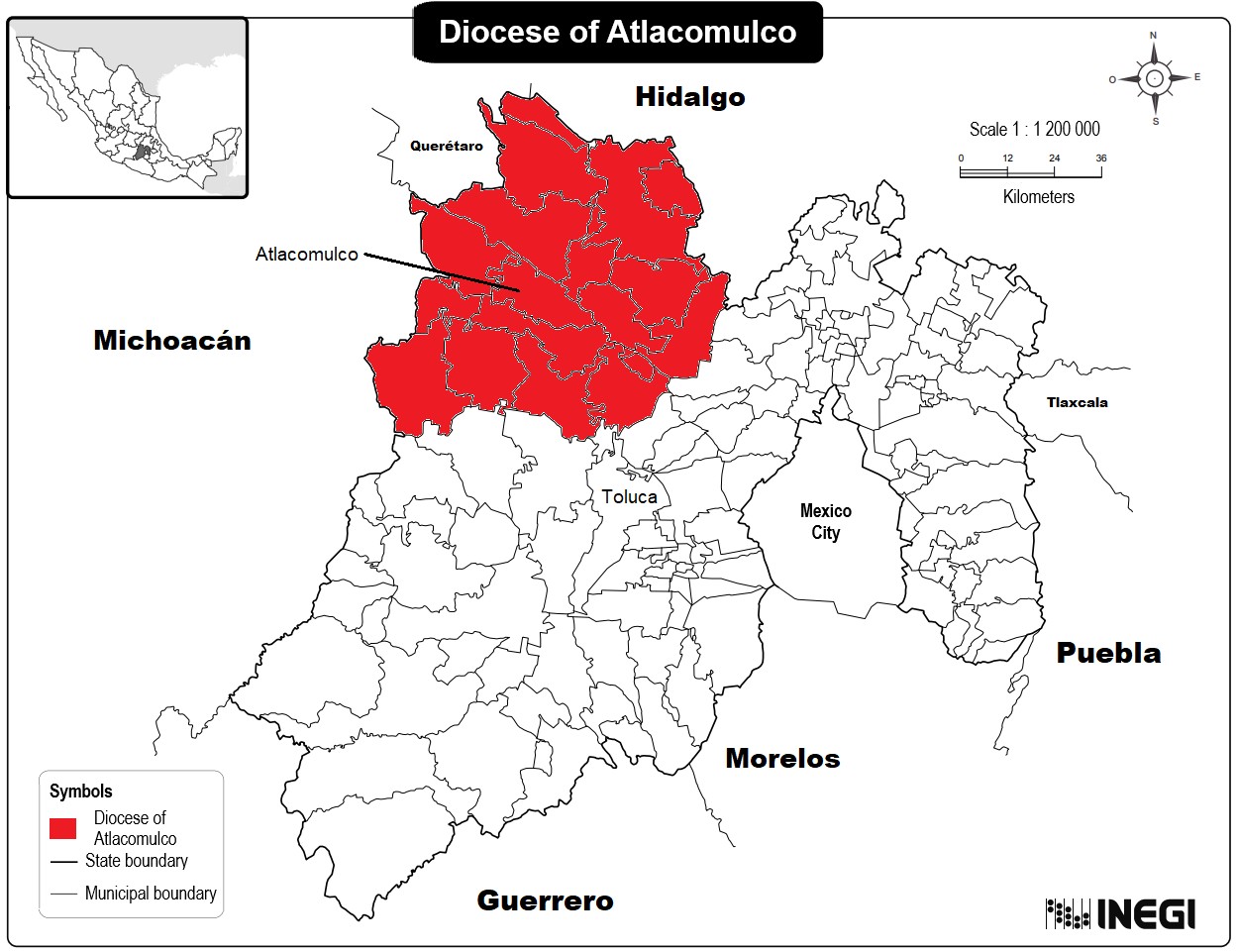
Her mother used to work at the seminary, so Joana would frequently be there with her mother. After a bitter trial, with all the usual trappings of the lawyers hired by the Roman Catholic dioceses in Mexico, she and her legal team were able to prove she was the victim of abuse. As usual, the case went to an appeal court, and the case remains there in a limbo of sorts.

Los Angeles Press published a Spanish-only story dealing with her case, available before this paragraph, and an update on that case, available after this paragraph, where we show how the priest who abused her is already back in public ministry.

Since Joana called a news conference in Mexico City back in December 2023, there has been no new development in her case. The backlog in the Mexican judiciary has been worsened by the ongoing crisis after the coup performed by the Mexican legislature, and no information as to what will happen after this year’s election.
Deny, dismiss, distract
Finally, in Spain, the Conference of Catholic Bishops, unable to understand the damage abuse has done to Catholicism in their own country, decided to end the brief opening that allowed for the commission of a rather faulty, incomplete, report on clergy sexual abuse in their dioceses, nothing close to what their colleagues across the Pyrenees, in France did with the Sauvé Report.
Despite the very limited attempt of the Spaniard bishops there was hope in their will to acknowledge the many mistakes made over the decades on this issue, but instead of doing that they decided to close any venue to a potential agreement with the survivors of clergy sexual abuse there, leaving the courts as the last resort for the victims.
Sadly, unlike what has been happening in France, Germany, and other European countries, Spain is far closer to Latin America in that respect than to the practices of the European Union. Prescription rules are heavily enforced, and victims have to go through the usual ordeal of being revictimized, being forced to litigate their cases in the media.
Los Angeles Press published the story, available only in Spanish after this paragraph, dealing with the latest decision from the Spaniard Conference of Catholic Bishops to dismiss the complaints of the victims while betting their future on the judicialization of the cases.
Once again, this series demonstrates that from the corridors of power in Washington to rural parishes in Mexico and the courts of Argentina and Spain, abuse happens on a global scale.
These cases, while distinct, share a common thread: the abuse of power and the silencing of victims. The fight against abuse is not limited to a single nation or institution; it is a global struggle demanding collective attention and determination, hence the concern about the potential impact of the rush to silence victims in the United States, which is where key advances have been taking place over the past 40 years, as well as the potential implications of the processes for appointing members of the judiciary in Argentina and Mexico.